

Ergonomics analysis: Health and efficiency in logistics
An ergonomic analysis examines the extent to which employees are physically exposed to strain during their daily work and identifies opportunities to improve workstations and processes.
Particularly in logistics, a thorough ergonomic analysis helps to minimise health risks, make processes more efficient and reduce absenteeism.
Companies today face a dual challenge: they must operate productively while at the same time designing workplaces hat enable employees to remain healthy and perform effectively over the long term. This is precisely where Rocholz comes in with Ergoficiency®.
The approach systematically combines ergonomics and efficiency. Rather than simply looking at individual movements, Ergoficiency® analyses the entire work context: the people, the technology used and the organisational processes.
- An ergonomic analysis identifies where employees are subjected to particularly high physical strain in their daily work. This provides companies with a sound basis for making targeted improvements to workstations and processes.
- In logistics, an ergonomics analysis helps to identify health risks at an early stage and reduce them systematically. This is particularly important because repetitive movements, lifting and poor posture can cause long-term strain.
- Rocholz combines the ergonomic analysis with the Ergoficiency® approach to consider health and processes together. This allows ergonomic weaknesses to be assessed not in isolation, but in the context of technology and organisation.
What is an ergonomic analysis?
An ergonomic analysis is the structured assessment of workstations, movement patterns and environmental factors. The aim is to identify physical and organisational strains and to improve them specifically.
A good ergonomic analysis answers questions such as the following:
- Which movements place the greatest strain on muscles and joints?
- Where do poor postures occur, such as deep bending or heavy lifting?
- Which work equipment, reach zones or heights are poorly designed?
- How do lighting, noise or temperature affect concentration and performance?
- Which processes cause unnecessary walking distances, time wastage or additional strain?
An ergonomic analysis objectively demonstrates how work affects people and which measures improve health and efficiency.
It therefore goes far beyond a simple visual inspection. Modern methods assess not only postures, but also movements, stress patterns and relevant environmental conditions.
Why is an ergonomic analysis particularly important in logistics?
In logistics, high-speed operations, manual tasks and varying workloads all come together.
Employees lift, reach, turn, walk, pack, pick orders or work at various workstations. For this reason, an ergonomic analysis is especially valuable in logistics operations.
Common problems with workstations that are not ergonomically designed:
- Without an ergonomic analysis, physical strain increases because strenuous movements and inefficient workflows go unrecognised in daily work.
- Lower employee satisfaction frequently arises when avoidable strain and poor working conditions are not identified through ergonomic assessment.
- Higher error rates occur when physical strain, inefficient processes and a lack of ergonomics negatively affect concentration during daily work.
- Reduced productivity arises when unnecessary walking distances, additional workload and inefficient work processes are not systematically identified.
- Rising sickness absence and downtime are often the result when an analysis fails to identify ergonomic risks within the workplace at an early stage.
For us, ergonomics is not an isolated health issue. In the context of Ergoficiency®, the ergonomic analysis provides the basis for economically sound decisions. After all, healthy workplaces and efficient processes are not a contradiction, but rather reinforce one another.
How does an ergonomic analysis with Ergoficiency® work?
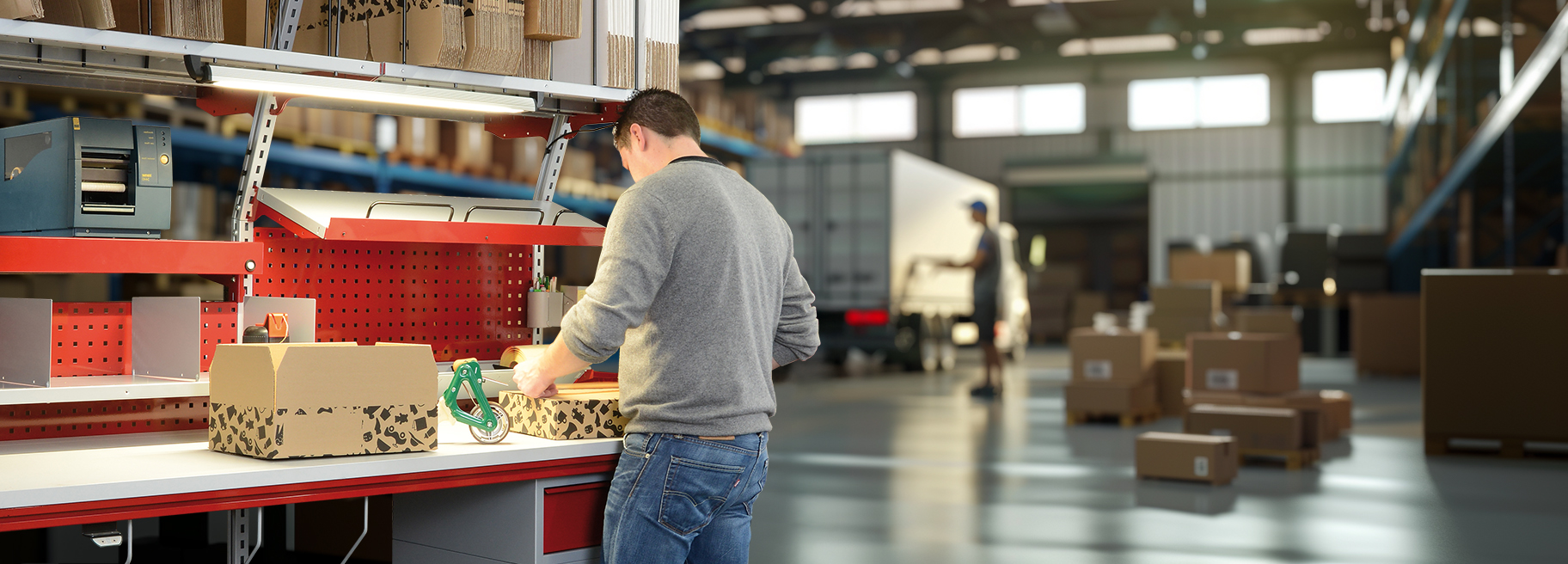
Rocholz's ergonomic analysis takes a holistic approach with Ergoficiency®. Strains are identified, evaluated anonymously and translated into specific improvement measures. The analysis provides objective data rather than subjective assessments.
Ergoficiency® focuses on four key areas of assessment:
1. Process Check
The process review examines which workflows actually take place and where there is scope for improvement. It focuses on walking distances, cycle times, interfaces and recurring disruptions.
The analysis begins by asking how work is organised -- because even inefficient processes can lead to physical strain.
2. Ergonomics radar
The ergonomics radar highlights the situations in which critical postures occur. These include, for example, frequent deep bending, awkward reaching movements, working overhead or heavy lifting.
This form of analysis helps to identify specific peaks in physical strain during the working day and to highlight work steps that pose ergonomic problems.
3. Health check
The health check measures the physical workload throughout shift. This makes it possible to see how intensely employees are actually being challenged and which tasks are particularly demanding.
A data-driven analysis therefore provides a much more reliable basis than observation or self-assessment alone.
4. Surroundings check
The surrounding check assesses factors such as light, noise and temperature. These factors are often underestimated, but have a direct impact on concentration, well-being and the quality of work.
An ergonomic analysis is only complete if it systematically evaluates the working environment as well as physical activity and strain.
What are the benefits of an ergonomic analysis for companies?
A professional ergonomic analysis delivers benefits on several levels: health-related, organisational and economic.
The key benefits:
- early identification of ergonomic risks
- reduced physical strain on employees
- a sound basis for workplace optimisation
- improved process quality and reduced time losses
- greater employer attractiveness
- support for health, safety and prevention
We clearly define the benefits of Ergoficiency®: healthy employees, efficient processes, measurable results.
This is particularly relevant in times of a skills shortage. Companies that design ergonomic and productive workplaces strengthen their competitiveness.
Which companies benefit most from an ergonomic analysis?
An ergonomic analysis is particularly beneficial for companies with manual or semi-automated work processes. These primarily include logistics, intralogistics, order picking, assembly, packaging and dispatch.
Typical reasons for carrying out an ergonomics analysis are:
- Rising sickness absence rates are a clear indication that existing physical strains in the workplace should be examined more closely.
- High levels of physical strain in specific work areas, may indicate ergonomic weaknesses in the process.
- When planning the redesign of workstations, a thorough analysis provides a solid basis for better decision-making.
- Efficiency issues in existing processes can be systematically identified by jointly assessing workflows, movement patterns and physical strain.
- Employee feedback on strain or dissatisfaction should also be objectively examined and professionally assessed.
- Health, safety and prevention requirements can be effectively integrated into workplace design through an ergonomic analysis.
Even if companies have already invested in technology, an ergonomic analysis remains worthwhile. This is because not every technical solution automatically improves the actual working situation. Only the analysis reveals how people, processes and work equipment interact in practice.
Conclusion: Ergonomic analysis as the foundation for healthy and productive workplaces

An ergonomic analysis reveals how work affects people and where companies can take concrete action.
Particularly in logistics, it is a key lever for reducing strain, improving processes and creating future-proof workplaces.
With Ergoficiency®, we take a holistic approach: strain becomes objectively measurable, correlations are clearly identifiable and targeted measures can be derived.
In this way, the ergonomic analysis becomes more than a simple assessment, it becomes a strategic tool for health, productivity and measurable business success.
Companies that identify ergonomic risks early and improve processes through data-driven insights create the foundation for healthy employees, consistent performance and sustainable competitiveness.
Download the Ergoficiency® brochure
FAQ
Which work areas are most suitable for an ergonomic analysis?
An ergonomic analysis is particularly suitable for order picking, packing, assembly, dispatch and other areas involving manual or repetitive movements. It is especially valuable where lifting, grasping, turning, walking or awkward postures occur regularly.
When should a company carry out an ergonomic analysis?
An ergonomic analysis is advisable when sickness rates rise, employees report health issues or processes lose efficiency. It also provides a reliable basis for decision-making prior to the redesign of workstations or when implementing new layouts.
What data is collected through Ergoficiency®?
As part of Ergoficiency®, movements, physical strain, work processes and environmental factors such as light, noise and temperature are analysed. The aim is to objectively identify sources of strain and derive concrete improvement measures.
Is a sensor-based ergonomic analysis compatible with data protection requirements?
A sensor-based ergonomic analysis can be carried out in compliance with data protection regulations if the collected data collected is anonymised and not used for individual monitoring. Rocholz explicitly positions Ergoficiency® as a fully GDPR-compliant approach without personal performance tracking.
What happens after an ergonomic analysis?
Following an ergonomic analysis, companies receive a detailed assessment of the identified strain factors, process weaknesses and areas for improvement. On this basis, specific measures relating to workplace design, technology and organisation can be prioritised and implemented.